
Ethiopia - Hambela - Organic
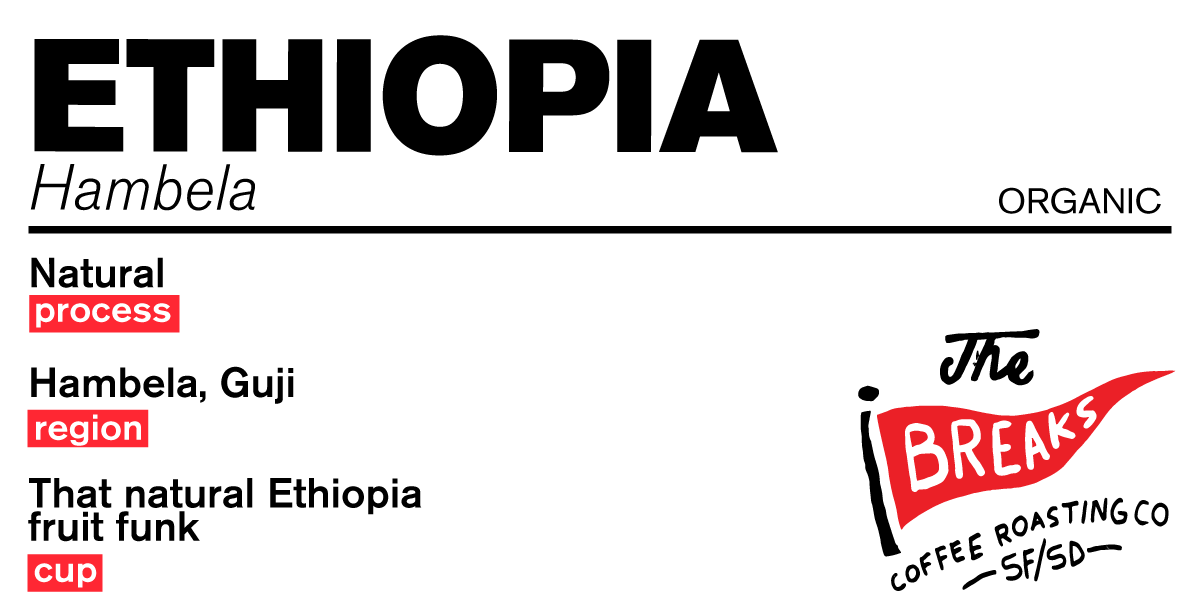
Ethiopia - Hambela - Organic
That Natural Process Ethiopia fruit funk.
Origin: Ethiopia
Region: Hambela, Guji
Washing Station: Hambela
Variety: Heirloom Ethiopian Varieties
Altitude: 1970-2241 Meters
Process: Natural
Wholebean
From Cafe Imports
Hambela
The Hambela Wamena Washing Station was founded in 2018 by the founder of Tega & Tula farms. Its location at the top of the highest mountain peak of Guji Hambela makes it a central point to serve surrounding towns and it currently serves around 3,900 producers. There are a number of social programs supported by this washing station including the building of roads, schools, and technical equipment and support for producers as well as medical health expenses and support for women's health care.
Coffees in Ethiopia are typically grown on very small plots of land by farmers who also grow other crops. The majority of smallholders will deliver their coffee in cherry to a nearby washing station or central processing unit, where their coffee will be sorted, weighed, and paid for or given a receipt. Coffee is then processed, usually washed or natural, by the washing station and dried on raised beds.
The washing stations serve as many as several hundred to sometimes a thousand or more producers, who deliver cherry throughout the harvest season: The blending of these cherries into day lots makes it virtually impossible under normal circumstances to know precisely whose coffee winds up in which bags on what day, making traceability to the producer difficult. We do, however, make every available effort to source coffee from the same washing stations every year, through our export partners and their connections with mills and washing stations.
Typically farmers in this region don't have access to and therefore do not utilize fertilizers or pesticides in the production of coffee.
Guji
Guji is a beautifully forested area in southern Ethiopia. Before the early 2000's, this region was considered part of Sidama, but has since become its own region. The people of Guji grow coffee gardens at very high altitudes in the rich red soil of the highlands, setting this coffee's profile apart from neighboring regions. These smallholders deliver their coffee to washing stations to be sorted and processed together, developing flavors of fruits, deep chocolate, and light florals.